
Single vs Double Bathroom Vanity: Making the Right Choice
Choosing between a single vs double bathroom vanity is one of the most impactful decisions you’ll make during a bathroom renovation. The right choice affects your daily routine, storage capacity, bathroom traffic flow, and overall room aesthetic. It’s not simply a matter of picking whichever looks best—practical considerations like room dimensions, plumbing requirements, and how many people share the space all play a role.
This guide breaks down everything you need to consider so you can make a confident, informed decision for your Kitchener-Waterloo area home.
Understanding Single and Double Vanities
What Is a Single Vanity?
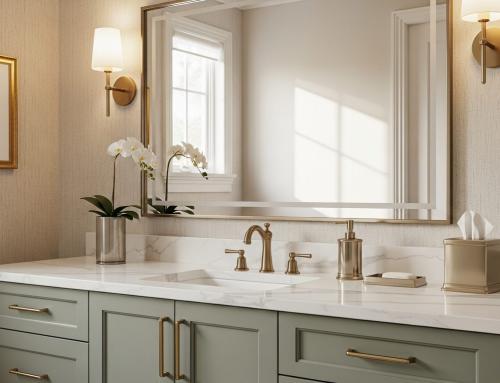
A single vanity features one sink basin and one faucet, with a cabinet or storage unit below. Single vanities typically range from 24 to 48 inches wide, though the most common sizes are 30 and 36 inches. They’re the standard choice for powder rooms, guest bathrooms, and smaller primary bathrooms.
What Is a Double Vanity?
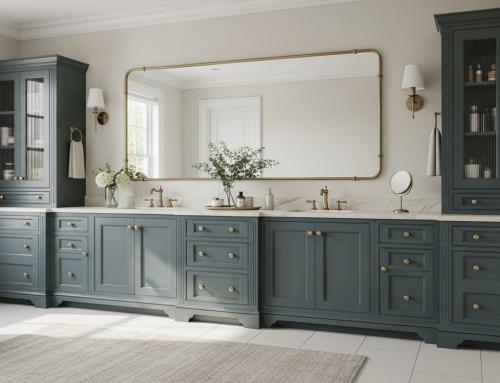
A double vanity features two sink basins with separate faucets, usually on a shared countertop supported by one long cabinet. Double vanities typically start at 60 inches wide and can extend to 72 inches or more. They’re the preferred choice for primary bathrooms shared by couples or families.
Space Requirements: How Much Room Do You Need?
Before you fall in love with a particular vanity style, measure your bathroom carefully. Space constraints are the primary factor that determines whether a single or double vanity is realistic for your renovation.
Minimum Space for a Single Vanity
A single vanity needs at least 15 inches of clearance from the centre of the sink to the nearest side wall or obstruction (this is a building code requirement in Ontario). You should also have a minimum of 21 inches of clear floor space in front of the vanity for comfortable use, though 30 inches is ideal.
For a standard 30-inch single vanity, plan for a wall space of about 34 to 36 inches to allow breathing room on each side. Even the smallest powder room in an older Kitchener home can typically accommodate a 24-inch single vanity.
Minimum Space for a Double Vanity
A double vanity needs significantly more space. The minimum recommended wall width is about 60 inches (5 feet), but 72 inches is much more comfortable and allows for adequate counter space between the two sinks.
The centre-to-centre distance between the two sink drains should be at least 30 inches, and ideally 36 inches, to give each person enough elbow room. You also need the same 21-inch minimum clearance in front of the vanity, and the bathroom door should be able to open fully without hitting the vanity.
Measuring Your Bathroom
Grab a tape measure and record these dimensions:
- Total wall width where the vanity will be installed
- Distance from the wall to any obstructions (toilet, door swing, shower enclosure, towel bars)
- Available depth from the wall into the room (most vanities are 18 to 22 inches deep)
- Location of existing plumbing (drain and water supply lines)
- Ceiling height and any soffit or lighting clearance issues
If you’re unsure whether your bathroom can accommodate a double vanity, our team can help you assess the space. Visit our page on vanity sizes and configurations for detailed sizing guidance.
Advantages of a Single Vanity
Don’t assume that a single vanity is automatically the lesser choice. In many situations, a well-designed single vanity is the smarter option.
More Counter Space
This might seem counterintuitive, but a 48-inch single vanity actually provides more usable counter space than a 60-inch double vanity. With two sinks taking up surface area, the double vanity leaves less room for toiletries, accessories, and daily grooming items between and beside the basins.
More Storage Below
A single vanity’s cabinet has uninterrupted storage space without the plumbing from a second sink eating into it. The interior can be configured with full-width drawers, pull-out trays, and shelves that span the entire width of the cabinet.
Better for Small Bathrooms
In bathrooms under 50 square feet, a single vanity maintains comfortable circulation space and prevents the room from feeling cramped. This is especially relevant in many older homes in the Kitchener-Waterloo area, where bathroom footprints tend to be modest.
Lower Cost
A single vanity is less expensive in virtually every way: the cabinet itself costs less, you need one faucet instead of two, one drain assembly instead of two, and the plumbing installation is simpler and cheaper.
Simpler Plumbing
A single vanity requires one set of water supply lines and one drain connection. If your bathroom currently has a single sink and you’re staying with one, the plumbing work during renovation is straightforward.
Advantages of a Double Vanity
For shared bathrooms, the double vanity offers benefits that many couples and families consider essential.
Shared Morning Routines
The biggest advantage of a double vanity is that two people can use the bathroom simultaneously without fighting for sink access. During busy weekday mornings, this practical benefit can genuinely reduce household stress and save time.
Personal Space
Each person gets their own sink, their own mirror space, and their own storage section. This separation reduces disagreements about countertop clutter and keeps personal items organized and accessible.
Increased Home Value
A double vanity in the primary bathroom is consistently listed as a desirable feature by real estate agents in the Kitchener-Waterloo market. While it shouldn’t be the sole reason you choose a double vanity, it’s a meaningful consideration if you may sell your home in the future.
Symmetrical Design
Double vanities create a naturally symmetrical look that many homeowners and designers find visually appealing. Matching mirrors, matching lighting fixtures, and a balanced layout give the bathroom a polished, intentional appearance.
Key Factors in Making Your Decision
Who Uses the Bathroom?
This is the most practical consideration. Think honestly about how the bathroom is used:
- Couple sharing a primary bathroom: A double vanity is worth the investment if space allows. The convenience during busy mornings is significant.
- Single occupant primary bathroom: A large single vanity with generous counter and storage space is usually the better choice.
- Children’s shared bathroom: A double vanity helps with bedtime and morning routines, especially with multiple children.
- Guest bathroom: A single vanity is almost always sufficient. Guests rarely need simultaneous sink access.
- Powder room: Always a single vanity, typically a smaller one at 24 to 30 inches.
Bathroom Layout and Traffic Flow
A double vanity that makes the bathroom feel cramped defeats its own purpose. If installing a double vanity means you can barely squeeze past to reach the shower or toilet, the space would be better served by a single vanity with more open floor area.
Consider the door swing, the path from the door to the shower or tub, and the clearance around the toilet. Every person who uses the bathroom should be able to move comfortably through the space.
Plumbing Considerations
If your bathroom currently has a single sink, adding a second requires new plumbing lines. While this is certainly doable during a renovation, it adds cost and complexity. The existing drain location, the proximity to the main stack, and the wall structure all affect how easily new plumbing can be added.
Storage Needs
Think about what you need to store in and around the vanity. If storage is a priority, a single vanity might give you more usable cabinet space. If you have other storage solutions in the bathroom (a linen closet, medicine cabinets, built-in niches), a double vanity becomes more practical since you’re not relying solely on it for storage.
Budget
A double vanity renovation costs more across the board:
- The vanity unit itself is larger and more expensive
- A longer countertop requires more material
- Two faucets, two drains, and two sets of supply lines
- Potentially wider mirror or two separate mirrors
- Additional lighting fixtures
- More plumbing labour if adding a second sink
Countertop Material
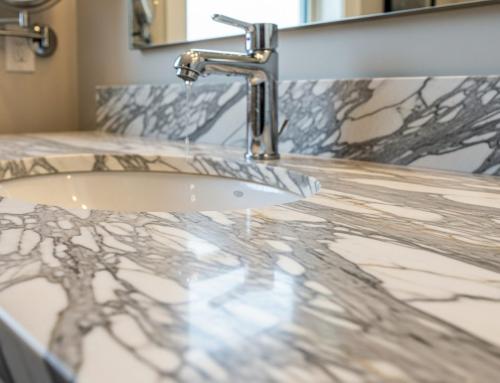
The material you choose for your vanity countertop affects the cost difference between single and double configurations. With higher-end materials like quartz or marble, the additional countertop length for a double vanity adds meaningful cost. Explore your options on our stone countertops page.
Creative Alternatives to Consider
If you’re torn between a single and double vanity, these alternatives offer middle-ground solutions.
Trough Sink
A trough sink is a single, extra-wide basin that can accommodate two faucets. It requires less space than a traditional double vanity with two separate sink bowls while still allowing two people to wash simultaneously.
His-and-Hers Separate Vanities
Rather than one continuous double vanity, two separate single vanities placed with a gap between them create a distinctive look and can be more flexible in terms of placement. The gap between them can house a stool, a tower of drawers, or simply open space.
Oversized Single Vanity
A 48-inch single vanity provides generous counter space, ample storage, and a luxurious feel without the complexity of double plumbing. For bathrooms where only one person typically uses the sink at a time, this can be the sweet spot.
Let Us Help You Decide
The single vs double bathroom vanity decision comes down to your specific space, lifestyle, and priorities. There’s no universally right answer—only the right answer for your bathroom.
At Kitchen & Bath World, we carry a wide range of both single and double vanity configurations and can help you determine which option works best for your space. Visit our showroom at 899 Victoria St N in Kitchener, check our vanity sizes and configuration guide, or contact us at (519) 744-2284 to discuss your bathroom renovation. We serve homeowners throughout Kitchener, Waterloo, Cambridge, and Guelph.