
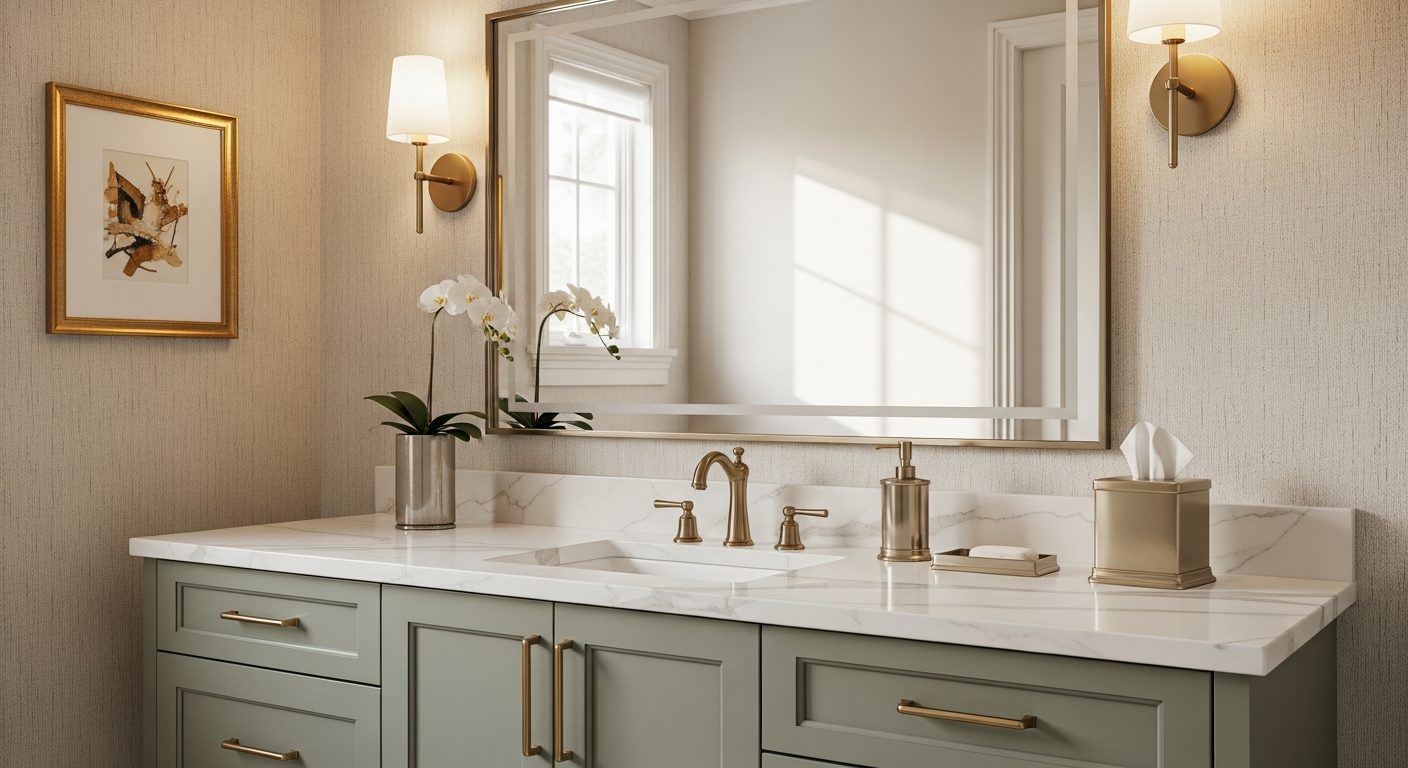
Your bathroom vanity sets the design tone for the entire room. It's typically the largest piece of furniture in the space and the first thing your eye is drawn to when you walk through the door. Choosing a vanity that aligns with your personal style and complements your home's architecture creates a bathroom that feels cohesive, intentional, and inviting.
With dozens of bathroom vanity styles available, narrowing down your options can feel overwhelming. This guide breaks down the major design categories—modern, traditional, transitional, farmhouse, mid-century modern, and industrial—so you can identify which style speaks to you and learn how to execute it in your bathroom renovation.
Modern bathroom design is defined by clean lines, minimal ornamentation, and a sense of calm, uncluttered simplicity. Modern vanities embody the "less is more" philosophy, creating a spa-like atmosphere that many homeowners find deeply appealing.
Modern vanities pair beautifully with quartz (particularly white or grey with subtle veining), concrete, and porcelain slab countertops. The countertop should complement the vanity's clean lines rather than compete with them. Visit our stone countertop page to explore options that suit a modern aesthetic.
Modern vanities work best in contemporary homes and recently renovated bathrooms. They're particularly effective in smaller spaces, where the streamlined profile and floating installation help the room feel larger than it is. Many new-build condominiums and townhomes in the Kitchener-Waterloo area suit this style perfectly.
Traditional vanity design draws from classical European influences, emphasizing ornate craftsmanship, rich materials, and a sense of timeless elegance. Traditional vanities feel substantial and luxurious, often resembling fine furniture more than utilitarian bathroom fixtures.
Traditional vanities pair naturally with marble (Carrara or Calacatta), granite with warm tones, and cultured marble with classic edge profiles. A polished finish complements the refined aesthetic of traditional design.
Traditional vanities feel most at home in older homes with existing architectural details like crown moulding, wainscoting, and panelled doors. Many Victorian-era and Edwardian homes in Kitchener's established neighbourhoods suit traditional vanity design perfectly. They're also a natural choice for formal guest bathrooms and primary suites where elegance is a priority.
Transitional design is the comfortable middle ground between modern and traditional, borrowing the best elements of both without committing fully to either. It's the most popular design style in Canada for good reason: it's versatile, timeless, and works in almost any home.
Transitional vanities work with virtually any countertop material. Quartz in marble-look patterns is the most popular pairing, offering the look of natural stone with easier maintenance. Granite in neutral tones and solid surface materials also complement the transitional aesthetic.
Transitional vanities are the safe choice that works in almost any bathroom. They're particularly well-suited to homes that blend old and new elements, such as renovated older homes in Waterloo or Cambridge where the homeowner wants a fresh look without losing the home's character. The shaker door profile is the most popular cabinet door style across both kitchens and bathrooms for exactly this reason.
Farmhouse style celebrates warmth, natural materials, and a relaxed, lived-in aesthetic. It draws inspiration from rural and agricultural settings, emphasizing handcrafted quality and honest materials.
Farmhouse vanities pair well with butcher block, honed marble (for a softer, more rustic look than polished), concrete, and soapstone. The countertop should have a natural, honest quality that matches the vanity's character.
Farmhouse vanities work beautifully in rural homes, cottage-style properties, and any bathroom where a warm, relaxed atmosphere is desired. They're also popular in suburban homes throughout the Kitchener-Waterloo region as a way to add character and warmth to otherwise neutral spaces.
Mid-century modern design, originating from the 1940s through 1960s, has experienced a massive revival. Its emphasis on organic forms, warm wood tones, and functional design resonates strongly with contemporary homeowners.
White quartz, white marble, and white solid surface countertops create a striking contrast against the warm wood tones typical of mid-century design. Concrete countertops also work well for a more industrial mid-century look.
Mid-century modern vanities complement both vintage 1950s and 1960s homes (preserving architectural authenticity) and contemporary spaces that embrace retro influences. They add warmth and personality without feeling fussy or overdone.
Industrial design celebrates raw materials, exposed construction, and the utilitarian aesthetic of converted factories and warehouses. Industrial vanities make a bold statement that works in the right setting.
Concrete, butcher block, reclaimed wood, and honed dark granite complement the industrial aesthetic. The countertop should feel substantial and honest, not polished or delicate.
Industrial vanities work best in loft-style spaces, converted commercial buildings, and homes with an urban, edgy design direction. They can also serve as a striking focal point in an otherwise neutral contemporary bathroom.
With so many bathroom vanity styles to choose from, these guidelines help you narrow your options.
Your vanity should harmonize with your home's overall architectural style. A highly ornate traditional vanity in a minimalist modern condo feels out of place, just as an industrial pipe-frame vanity would clash in a Victorian heritage home. Choose a vanity style that complements your home's bones.
If your bathroom is visible from a hallway, bedroom, or living area, the vanity style should transition smoothly from the adjacent spaces. A jarring style shift between rooms disrupts the flow of your home.
While your bathroom doesn't need to be identical to your kitchen, maintaining a similar design language creates cohesion throughout the home. If your kitchen has shaker cabinets, a shaker-style bathroom vanity ties the spaces together.
If you plan to sell your home within five to ten years, more universally appealing styles (transitional, modern, and well-executed traditional) tend to attract broader buyer interest than highly niche styles (industrial, ultra-bold modern, or heavily themed designs).
Ultimately, you live in your home every day. Choose a style that makes you happy and feels authentic to your taste. Design trends come and go, but a bathroom that reflects your personal aesthetic will bring you satisfaction for years.
Don't feel locked into a single design category. Many of the best bathrooms blend elements from multiple styles. The key to successful style mixing is choosing one dominant style and incorporating subtle accents from another. For example:
Photos and descriptions can only convey so much. Seeing vanity styles in person—touching the materials, opening the drawers, comparing finishes side by side—gives you a much clearer picture of what works for your space and your taste.
At Kitchen & Bath World, our Kitchener showroom at 899 Victoria St N displays a curated collection of vanities across multiple design styles. Our team can help you identify your style preferences, coordinate your vanity with your countertops and accessories, and create a cohesive bathroom design you'll love.
Browse our gallery for inspiration, or contact us at (519) 744-2284 to schedule a design consultation. We serve homeowners throughout Kitchener, Waterloo, Cambridge, and Guelph.
Answers to your renovation questions
Transitional is the most popular vanity style in the Kitchener-Waterloo area, and across Canada. It blends clean modern lines with the warmth of traditional detail, usually through a shaker door, so it suits both newer homes and renovated older ones in Waterloo or Cambridge. It is the safe, timeless choice that rarely dates. Browse the bathroom vanities we build in solid maple to see transitional options.
Traditional vanities pair naturally with marble looks, warm-toned granite, or quartz in classic veined patterns with a polished finish. The goal is a refined surface that matches the furniture-style detail of the cabinetry rather than competing with it. If you want the marble look without the upkeep, quartz is the practical pick. Explore our quartz and porcelain countertops to find a match for your style.
Let your home's existing architecture lead. Traditional vanities suit older Kitchener homes with crown moulding and panelled doors, modern suits new-build condos and townhomes, and transitional bridges the two for renovated homes that mix old and new. Match the vanity to the trim and door style already in the house for a cohesive result. A free design consultation can help you pin down the right direction.
For small bathrooms, a 24 to 36 inch freestanding vanity usually offers the best balance of storage and floor space. Measure carefully and leave room for the door swing and comfortable movement before choosing. A clean, simple door style also keeps a small room from feeling cluttered. Our guide to vanity sizes for small bathrooms walks through the measurements that matter.
Yes. The shaker door, a simple frame around a flat centre panel, is the most popular cabinet style across both kitchens and bathrooms because it never really goes out of fashion. It works in modern, traditional, and transitional rooms alike, which protects your investment if tastes shift. Built in solid maple rather than MDF, it also lasts for decades. See how the same profile carries through our cabinet door styles.
Yes. When an awkward wall, plumbing location, or odd alcove rules out a stock size, a custom vanity built to your exact dimensions is the answer. Because we design every project in 3D and build in-house from solid maple, the cabinet is made to your space rather than forced into it. Our guide to custom bathroom vanities explains when standard sizes fall short.
Have more questions? We’re here to help.
Come see the cabinets and finishes in person at 899 Victoria St N, Kitchener — or fill out the form and our team will get back to you about your kitchen or bath project.

Answers to your kitchen renovation questions
Simply fill out our online form or call us during business hours. We’ll schedule a visit or in-showroom consultation at your convenience.
We provide kitchen cabinets, bathroom vanities, countertops, and accessories. All products are available in a range of styles and finishes.
Yes, we work with both homeowners and contractors across Kitchener, Waterloo, Cambridge, and Guelph.
Absolutely. Visit us at 899 Victoria St N, Kitchener, ON. No appointment needed during business hours.
All cabinetry and countertops come with a manufacturer’s warranty. Details are provided at purchase or upon request.
Most kitchen or bath projects are completed within 2–4 weeks after final measurements and product selection.
Need more information? We’re here to help.