
Small Details, Big Impact
Kitchen cabinet hardware might seem like an afterthought — one of the last decisions in a renovation. But these small pieces of metal (or occasionally wood, leather, or ceramic) have an outsized impact on how your kitchen looks and feels. They’re the jewellery of the kitchen: the finishing touch that either elevates the design or undermines it.
Hardware is also one of the most affordable ways to update a kitchen’s appearance. Replacing knobs and pulls on existing cabinets costs a few hundred dollars and takes an afternoon, yet the visual change can be dramatic. Whether you’re choosing hardware for a full renovation or giving your current kitchen a quick refresh, this guide will help you make the right choice.
Knobs, Pulls, and Handles: What’s the Difference?
Knobs
Knobs are single-point hardware — one mounting hole, one screw. They come in round, square, and various decorative shapes. Knobs work best on cabinet doors where you grip and pull to open. They’re less effective on drawers because pulling a heavy, full drawer open with a single small knob can be awkward.
Pulls (Bar Pulls)
Pulls are the most popular hardware style in modern kitchens. They’re straight bars with two mounting points, available in lengths from 3 inches to 18 inches or more. Pulls are easier to grip than knobs, especially with wet or greasy hands, and they work well on both doors and drawers. Long pulls (12 to 18 inches) on drawers are particularly comfortable because you can grab them from anywhere along the bar.
Cup Pulls (Bin Pulls)
Cup pulls have a concave, half-moon shape that you pull with your fingers curled underneath. They’re traditionally used on drawers and have a classic, slightly vintage feel. Cup pulls are extremely comfortable and functional on drawers but don’t work on cabinet doors.
Finger Pulls and Edge Pulls
These mount on the top edge of a door or drawer, creating a minimal, nearly invisible look. They’re popular in contemporary and minimalist kitchens where the goal is clean, uninterrupted cabinet fronts. The trade-off is less grip — they’re not as easy to use as a full pull, especially for people with limited hand strength.
Integrated (Routed) Pulls
Instead of separate hardware, a groove or channel is routed directly into the cabinet door or drawer front. This creates a completely hardware-free look. It’s the most minimalist option available and suits ultra-modern kitchens, but it requires custom or semi-custom cabinetry and adds to the cost of each door.
Choosing the Right Style for Your Kitchen
Hardware style should complement your cabinet door style and overall kitchen aesthetic. Here’s a general guide:
Traditional Kitchens
Raised-panel doors with ornate moulding profiles call for hardware with similar detailing. Look for:
- Round or oval knobs with decorative edges
- Cup pulls on drawers
- Pulls with curved or scroll details
- Finishes like antique brass, oil-rubbed bronze, or polished nickel
Transitional Kitchens
Shaker-style doors bridge traditional and modern and work with the widest range of hardware. Transitional hardware is clean but not austere:
- Simple round or square knobs
- Clean bar pulls with minimal ornamentation
- Slightly tapered or subtly curved pulls
- Finishes like brushed nickel, matte black, or satin brass
Modern and Contemporary Kitchens
Flat-panel (slab) doors and high-gloss finishes pair best with hardware that’s geometric and minimal:
- Slim, straight bar pulls
- Finger pulls or edge pulls
- Integrated routed channels
- Finishes like matte black, brushed stainless, or polished chrome
Browse our kitchen cabinet door styles to see which profiles suit your taste, then choose hardware that reinforces that style.
Hardware Finishes: What’s Trending and What Lasts
Matte Black
The dominant hardware finish of recent years, matte black is bold, versatile, and works with virtually any cabinet colour. It’s particularly striking against white, light grey, and natural wood cabinets. Matte black hides fingerprints well and has a substantial, weighty feel that buyers appreciate.
Brushed Gold and Satin Brass
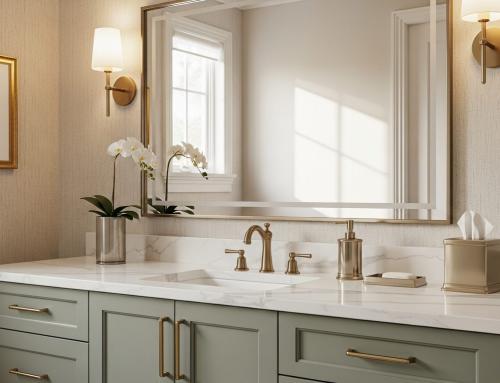
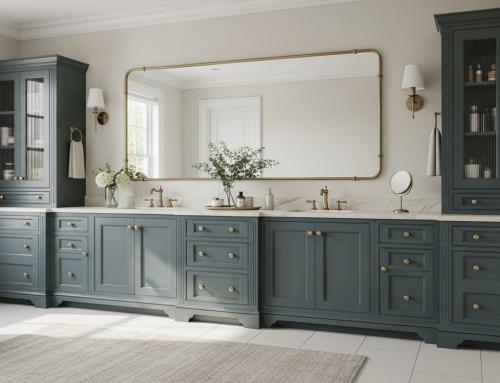
Warm metallic finishes have surged in popularity and show no signs of slowing down in 2026. Brushed gold and satin brass add warmth and a touch of luxury to any kitchen. They pair beautifully with white, navy, green, and wood-tone cabinets. Look for brushed or satin finishes rather than polished — the muted sheen is more versatile and shows fingerprints less.
Brushed Nickel and Stainless
The classic neutral. Brushed nickel and stainless hardware complement any cabinet colour and blend with stainless steel appliances. It’s the safest choice for resale because it’s inoffensive and universally accepted. However, in a market where matte black and brass are popular, brushed nickel can read as safe rather than stylish.
Oil-Rubbed Bronze
A warm, dark finish with copper undertones. Oil-rubbed bronze works best in traditional and rustic kitchens and pairs well with warm wood tones and earthy colour palettes. It’s less popular in contemporary settings but can be a beautiful choice in the right context.
Polished Chrome
Bright and reflective, polished chrome suits modern and contemporary kitchens. It’s sleek and eye-catching but shows fingerprints and water spots more than any other finish. If you choose polished chrome, expect to wipe it more frequently.
Mixed Metals
Mixing hardware finishes is becoming more accepted. The key is intention — mixing matte black pulls with brass knobs can look curated and sophisticated, while accidentally mixing three or four random finishes looks chaotic. If you mix, limit yourself to two complementary metals and use each one consistently in its zone (for example, brass on the island, black on the perimeter).
Sizing and Placement Guidelines
Pull Length
The centre-to-centre measurement (the distance between the two screw holes) determines the pull size. Common options:
- 3 to 4 inches: Works on small to medium doors and drawers. A classic, proportional choice for standard cabinets.
- 5 to 6 inches: The most popular size range. Works on virtually any standard cabinet door or drawer front.
- 8 to 12 inches: A more contemporary look. Longer pulls work well on taller doors and wider drawers.
- 12 to 18+ inches: Often called “appliance pulls,” these dramatic lengths make a design statement and are extremely comfortable on large drawers.
Knob Size
Cabinet knobs typically range from 1 inch to 1.5 inches in diameter. Smaller knobs look dainty but can be hard to grip. Larger knobs (1.25 to 1.5 inches) are easier to use and have more visual presence.
Where to Place Hardware on Doors
- Upper cabinet doors: Place knobs or pulls on the bottom corner of the door, on the side opposite the hinges. This puts the hardware at the most natural reaching height and closest to where your hand naturally grabs.
- Lower cabinet doors: Place knobs or pulls on the upper corner of the door, on the side opposite the hinges. Again, this minimizes the reach distance.
- Vertical or horizontal? On doors, pulls can be mounted either vertically or horizontally. Vertical is more traditional; horizontal is more contemporary. Both are functional. Choose based on the look you prefer.
Where to Place Hardware on Drawers
- Centred horizontally on the drawer front, always.
- Vertically: Centre the pull in the upper third of the drawer front, not dead centre. This provides a more natural grip position and better visual balance.
- Consistency: Whatever placement you choose, maintain it identically across all drawers. Inconsistent hardware placement is one of the most noticeable (and amateurish) mistakes in a kitchen.
Practical Considerations
Comfort and Ergonomics
Hardware needs to feel good in your hand. If anyone in the household has arthritis, limited grip strength, or reduced hand mobility, pulls are significantly easier to operate than knobs. D-shaped pulls and cup pulls offer the most comfortable grip. Visit a showroom and physically test the hardware before buying — comfort can’t be judged from a photo.
Maintenance
Different finishes require different care:
- Matte finishes (matte black, brushed nickel, satin brass) hide fingerprints and water spots well.
- Polished finishes (polished chrome, polished brass) show every touch and need frequent wiping.
- Living finishes (unlacquered brass, oil-rubbed bronze) develop a patina over time. Some homeowners love the aged look; others find it unkempt.
Cost
Hardware costs add up quickly. A kitchen with 30 to 40 doors and drawers at $8 to $15 per piece runs $240 to $600. Premium hardware at $20 to $40 per piece can push the total to $600 to $1,600. Factor hardware into your cabinet budget from the beginning to avoid sticker shock at the end.
Drilling Patterns
If you’re replacing existing hardware, check the hole spacing. Switching from a knob (one hole) to a pull (two holes) means drilling new holes and filling the old one. Switching between pulls with different centre-to-centre measurements requires new holes as well. If you want to avoid patching, choose hardware that uses the same hole pattern as the existing setup.
Knobs vs Pulls: Can You Use Both?
Absolutely. In fact, using both knobs and pulls in the same kitchen is a popular and practical approach:
- Pulls on drawers, knobs on doors: The most common combination. Pulls are more functional on drawers; knobs provide a classic touch on doors.
- Pulls on lower cabinets, knobs on uppers: Creates visual variety without looking mismatched.
- Same finish, different forms: As long as the knobs and pulls share the same finish and design language, they’ll look cohesive together.
How to Sample Before Committing
Don’t buy 40 pulls based on a website photo. Instead:
- Order samples. Most hardware suppliers offer individual pieces for purchase. Buy 2 or 3 contenders and hold them against your cabinet doors at home.
- Check the feel. Grip the pull. Open a cabinet with it. Does it feel comfortable, or are the edges sharp? Is the knob easy to grip, or does your hand slip?
- View under your lighting. Hardware finishes look different under showroom lights versus your kitchen’s lighting. Take samples home and evaluate them in your actual space.
- Consider scale. A pull that looks perfect on a 15-inch drawer may look lost on a 30-inch one. Test the proportions on different cabinet sizes throughout your kitchen.
Visit Our Showroom to See and Touch the Options
Choosing kitchen cabinet hardware is a tactile decision. You need to hold the options in your hand, mount them on a cabinet, and experience how they look and feel in real life.
At our showroom at 899 Victoria St N in Kitchener, we carry a wide selection of hardware in every style, finish, and price point. Pair them with our cabinet door displays to see exactly how your combination will look. Our team helps homeowners throughout Kitchener, Waterloo, Cambridge, and Guelph find the right hardware to complete their kitchen vision. Contact us or call (519) 744-2284 to visit.